
Help! Why so many cavities in midlife?!
May 31, 2026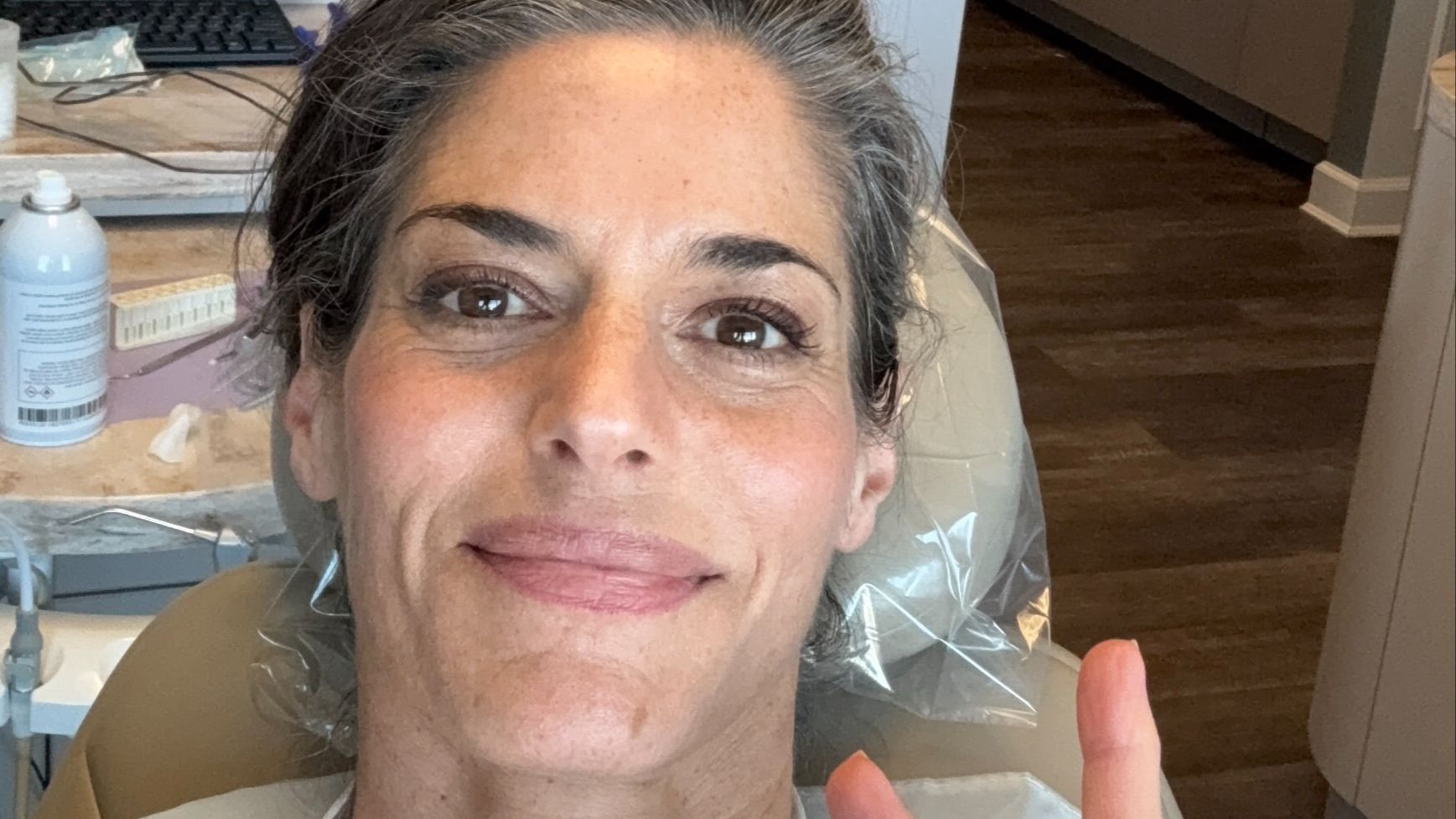
Fun fact: perimenopause has over 80 different symptoms and it seems like we discover new ones everyday. For me, this was certainly the case with my oral care: I've just turned 55 and inside of 2 months, I have had to have 2 root canals. TWO. If you're thinking there isn't a link, take a seat, love, because I did some deep-dive research and there's absolutely a link (that both my dentist and endodontist didn't know about!).
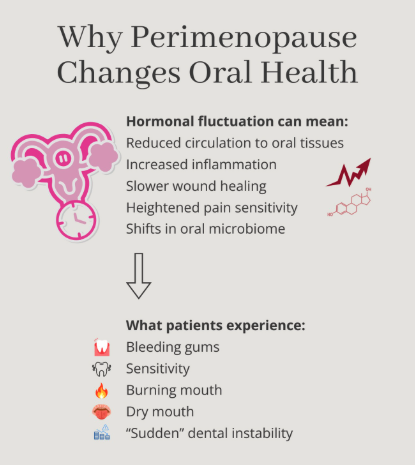
So it turns out, there are Estrogen receptors everywhere in your body, including in your salivary glands. As estrogen drops, saliva production decreases — and saliva is does some critical work in our mouths: it washes away food particles, it neutralizes acids, and it promotes enamel remineralization. When salivary levels drop, all three of those functions are affected.
Estrogen also supports blood flow to gum tissue and helps maintain jawbone density. When levels drop, all three functions are affected — and each of these has a downstream effect on the increasing risk of developing tooth decay, gum disease, and pulp infections. In short: declining estrogen means your mouth becomes a much more hospitable environment for the bacteria that cause tooth decay.
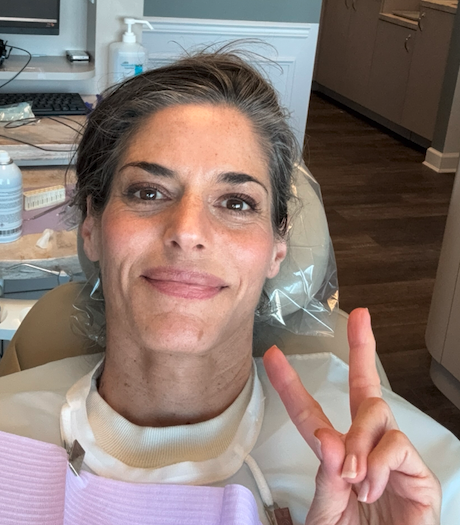
Here's the nuance: there isn't a direct correlation that menopause causes root canals. But it’s menopause (and the decline of estrogen) that creates several compounding oral health conditions that, left unmanaged, raise the probability of reaching that stage faster. A small cavity that might have taken years to progress can move toward the pulp much faster during menopause. And that's because of this hormonal shift taking place that impacts so many parts of our bodies.
But there's more. Let's talk osteoporosis, because we think it impacts our bones, sure, but our jawline?? YEP. The decline in estrogen leads to increased bone resorption and decreased bone formation. In the mouth, this shows up as reduced alveolar bone density (the bone that anchors teeth), making teeth more susceptible to mobility and possibly loss. And bone loss drives gum recession, which exposes the root surfaces of teeth — areas that have no enamel protection and are far more vulnerable to cavities.
And lower estrogen affects collagen production and blood flow to the gums, making them more sensitive, prone to bleeding, and vulnerable to infection. Research confirms that women in perimenopause and menopause are at significantly higher risk for gum disease.
Dental symptoms may begin in the perimenopause period — including dry mouth, mouth soreness, oral yeast infections, a proliferation of harmful oral bacteria, and cavities. If you’ve never had a cavity and suddenly in midlife you’re needing 2 root canals: this is why. The frustrating part is that you're likely eating the same and doing the same things and nothing's changed, but you're showing up in the dentist's office more often. And because your dentist hasn't studied declining estrogen levels in midlife and its impact on oral health, she's not connecting the dots to what so many of us are experiencing in this time of life - mine certainly wasn't - leaving both you and her unaware of the OG culprit.
Okay, so with all that to contend with: what can actually help?
Stay very well hydrated — and be strategic about it. This isn't just "drink more water" advice. When saliva production is compromised, water becomes your mouth's backup rinse system. Aim for at least 8 glasses a day, and make a habit of sipping water after every meal to manually do what saliva used to do automatically — wash away food particles and dilute acid. Avoid swishing with water immediately after brushing though, as it rinses away your toothpaste before it can do its job. Limit caffeine and alcohol, both of which are drying and compound the problem.
Use xylitol gum or lozenges between meals. Xylitol isn't just a saliva stimulant — it actively inhibits the growth of Streptococcus mutans, the primary bacteria responsible for tooth decay. It does this by disrupting the bacteria's ability to metabolize sugar, essentially starving them. Look for products where xylitol is the first ingredient, and aim for 6–10 grams per day across multiple exposures rather than one big dose. Brands like Spry and Zollipops are solid options.
Switch to nano-hydroxyapatite toothpaste. This is one of the most important swaps you can make in midlife and most women have never heard of it. Hydroxyapatite is the primary mineral that makes up your tooth enamel and dentin — so nano-hydroxyapatite toothpaste essentially gives your enamel the raw material it needs to remineralize. Unlike fluoride, which works by forming a different compound on the enamel surface, nano-HA actually integrates into the enamel structure. It also fills in microcracks and exposed dentinal tubules, which is particularly relevant if you're experiencing increased sensitivity — a very common menopause symptom. Look for brands like Boka, Risewell, or Davids (I've used Boka and David's and like them both very much!).
Consider HRT — it may be protecting more than you think. There's growing evidence that hormone replacement therapy has a meaningful protective effect on oral health. Restoring estrogen levels supports salivary gland function, reduces gingival inflammation, and — critically — helps slow the alveolar bone resorption that drives tooth mobility and root exposure. If you're already considering HRT for other reasons, add oral health to the list of reasons it's worth a serious conversation with your provider, though you might be informing them, not the other way around.
Oil pulling as a supportive practice. Swishing with a teaspoon of coconut or sesame oil for 10–15 minutes is a bedtime habit of mine that helps mechanically remove bacteria and debris from surfaces your toothbrush can't reach. It won't replace brushing and flossing, but as a supportive daily ritual — especially given the increased bacterial load in a low-saliva environment — it earns its place. It's also been known to whiten teeth, so what do you have to lose? Swish and spit.
Take your supplements seriously — but take the right ones in the right combinations. This is where most women are leaving real protection on the table.
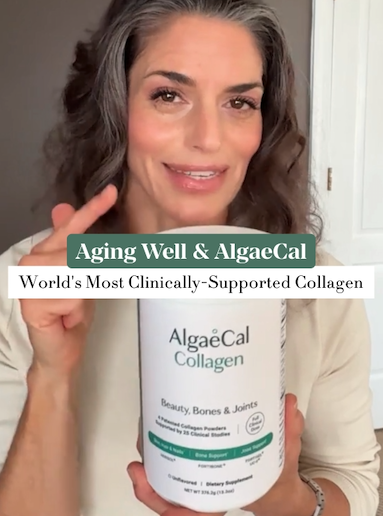
- Collagen peptides are arguably the most underrated oral health supplement for midlife women. Collagen is the structural protein that forms the scaffolding of your gums, the periodontal ligaments anchoring your teeth to your jawbone, and the connective tissue throughout your mouth. As estrogen drops, collagen production drops with it. Supplementing with hydrolyzed collagen peptides — particularly Type I and Type III — supports gum tissue integrity and may help slow recession. I take this brand of collagen, as it's a complete collagen offering and has no weird ingredients. And always pair it with Vitamin C, which is essential for collagen synthesis and is itself a meaningful anti-inflammatory for gum tissue.
- Up your Vitamin D3 with K2. Most people associate calcium with bone health, but without adequate D3, your body can't properly absorb it — and without K2, that calcium may not get directed to your bones and teeth where you need it. K2 acts as the traffic director, routing calcium to the right places and away from soft tissue. This combination is particularly relevant for alveolar bone density. Look for D3+K2 together in one supplement rather than taking them separately.
- Calcium is widely recommended for bone health in menopause, but the research has gotten more nuanced. High-dose calcium supplements without K2 have been associated with arterial calcification, so the K2 pairing is non-negotiable. Food-based calcium — leafy greens, sardines with bones, dairy if you tolerate it — is always preferable. If you do supplement, keep doses to no more than 500mg at a time, as that's the absorption ceiling anyway.
- Don't sleep on magnesium. Magnesium is a cofactor in over 300 enzymatic reactions, including bone mineralization. It works synergistically with calcium and D3, and most midlife women are chronically deficient. Low magnesium is associated with lower bone density — including in the jaw. I take a nightly magnesium glycinate supplement, which has been wonderful in giving me some good shut eye. I can recommend it for your oral health here, too.
Add an oral probiotic. Your mouth has its own microbiome, and just like the gut, declining estrogen disrupts it — creating an environment where harmful bacteria proliferate. Oral probiotics containing strains like Lactobacillus reuteri and Lactobacillus salivarius have been shown to reduce gingival inflammation and harmful oral bacteria counts. These are different from gut probiotics — look for lozenges or chewable tablets specifically formulated for oral health.
Move your face — seriously. One of the things declining estrogen does is reduce blood flow to gum tissue and the structures surrounding your teeth. Facial exercises, gua sha, and facial massage counteract exactly that — bringing fresh circulation to an area that is, hormonally speaking, getting less of it. Better blood flow means more oxygen and nutrients delivered to gum tissue, a stronger local immune response, faster tissue repair, and better support for collagen synthesis. These practices won't rebuild bone that's already been lost, but as a daily ritual for gum tissue vitality they are working directly against one of estrogen's most damaging oral health effects. You can learn more about my Facial Exercise Program here.
Chew tough foods and work your masseters. Bone responds to mechanical load — weight-bearing exercise builds bone density in your body and in your jawline. The muscles of mastication (chewing muscles) do apply force to the alveolar bone, so keeping them active matters. Tough cuts of meat, crunchy vegetables and nuts help maintain stimulation to the underlying bone. And facial exercise helps to stimulate blood.
If you take 1 thing away from this blog post...
Save this, screenshot it, bookmark it, send it to your best friend who just got back from the dentist with a surprise cavity at 52. Bring it to your next appointment and show your dentist — because the odds are good that she doesn't know this either, and you might just be the most informed person in the room. We're navigating a strange world where we're 51% of the population with enormous buying power but our formal medical and dental educators and practitioners don't address the issues that impact us in midlife.
This is exactly the kind of content I go deep on in my Aging Well Naturally Masterclass, launching this summer. If you want to understand not just your oral health but your hormones, your gut, your sleep, your skin, your strength — and how they all connect during this chapter of life — this is where we do that work together. You'll be the first to know about it, so stay tuned!
Let me know if you found this useful and if you drop me a note, know that I read every single comments.
Until then-
x
Juliana
Author