
How to Hit Your Protein Macros in Midlife, Part 1: The Foundations
Sep 28, 2026
So many of you tell me the same thing: "I'm pretty sure I'm getting enough protein." I said that to myself for years too, right up until perimenopause, midsection weight gain and my increasing muscle loss made it very clear I wasn't.
Here's the part research keeps confirming that nobody wants to hear: the vast majority of women in midlife are underestimating how much protein they eat, and under-eating it at levels that make it hard to keep or build muscle. Not to pick on you — I did this myself for years.
If there's one nutrition habit I want every woman in midlife to master, it's this one. Eat enough protein. Because this is the part that deserves to be double underlined, highlighted and tattooed to the inside of your eyelids: adequate protein intake can increase body composition shifts, even without resistance training.
Again, for the folks in the back: you can - for all intents & purposes - be a sedentary couch potato, but if you shift from eating inadequate to adequate protein amounts, you can see a shift in body composition away from visceral fat deposition in the abdomen area. Just by increasing your protein intake! (Which means: you might need to get serious about prioritizing protein at every meal and actually measuring your protein consumption.)
Muscle is what carries your strength, your mobility, your metabolism, your bone density, your independence, and your resilience, all in one tissue — which is exactly why protein matters more now than it ever has, and protein is what tells your body to keep that muscle instead of quietly letting it go.
And here's the good news: hitting your number doesn't have to be complicated. Once you know roughly what you need, and you've got a handful of protein foods you actually love, the whole thing gets easy. This is Part 1 of a 2-Part guide — today we'll cover your number, distributing it through the day, and your vegan, vegetarian, dairy, and egg options. Part 2 picks up with poultry, beef, pork, seafood, legumes, and protein powders.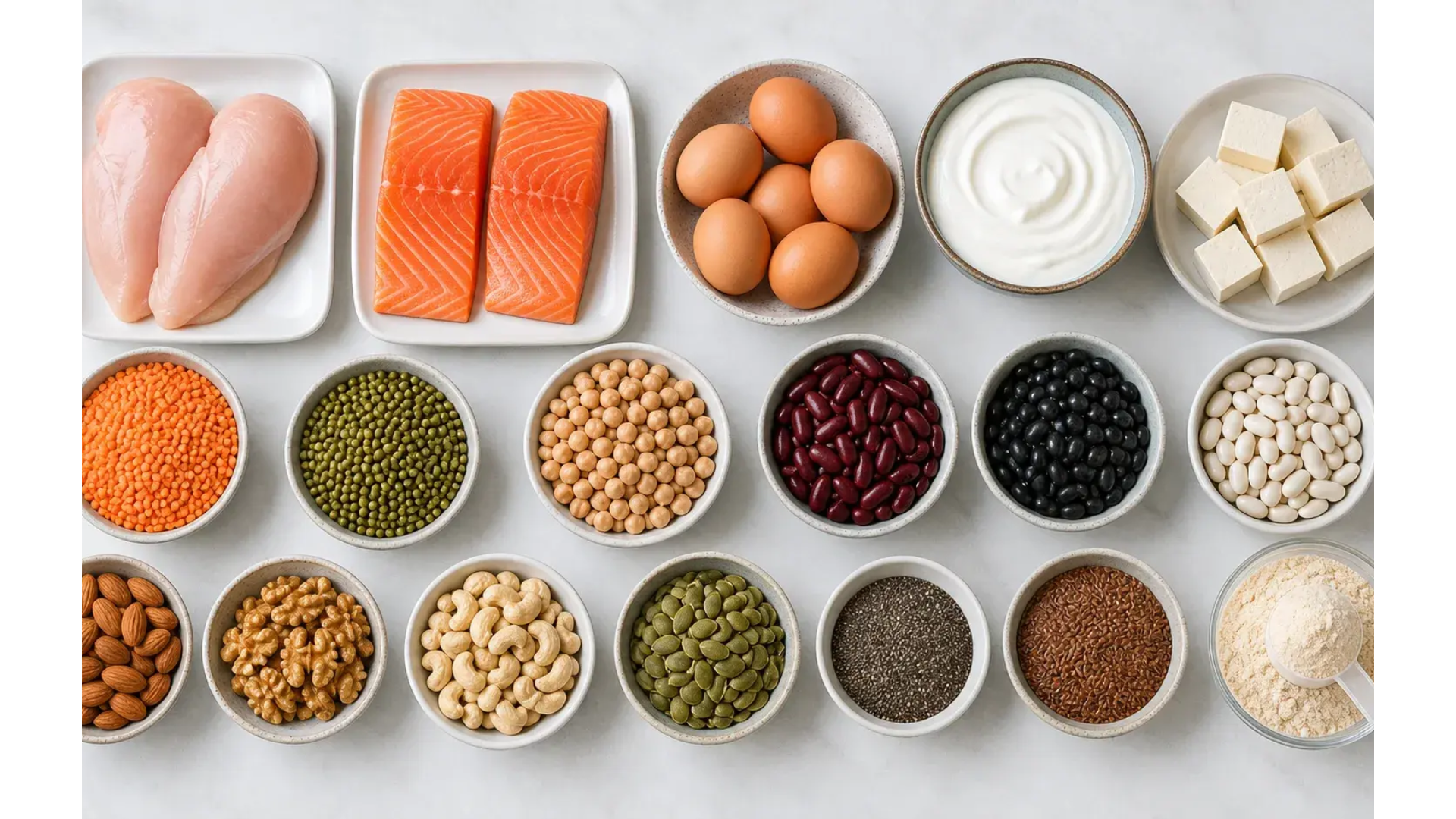
How Much Protein Do You Need in Midlife?
Your protein needs depend on your body size, activity level, goals, and overall health. But for active women in midlife, a useful target sits around 1.2 to 1.6 grams of protein per kilogram of body weight per day.
To find your range: divide your weight in pounds by 2.2, then multiply by 1.2 to 1.6.
Take a 130-pound woman — that's about 59 kilograms — and her range lands at roughly 70 to 94 grams a day.
If you're strength training regularly, working to build or hold onto muscle, or simply serious about supporting healthy aging, aim for the higher end of that range. For a lot of active women — myself included — somewhere around 100 to 130 grams a day is the real-world, practical target.
And here's something just as important as the total: quit saving all your protein for dinner. To stabilize your blood sugar, you want protein showing up throughout the day, so you're not the woman standing in her own pantry at 3pm hunting for anything with calories in it. Try distributing it across your meals instead:
- Breakfast: 50g
- Lunch: 40-50g
- Dinner: 25-30g
And just like that, a number that sounded daunting — 120, 130 grams — turns into three ordinary, doable meals.
The Best Protein Is the Protein You'll Eat Consistently
People ask me all the time which protein source is "best." My answer's straightforward: whichever one you'll actually eat, week after week, without a fight. There's no prize for choking down the "perfect" protein if you hate the taste, can't digest it, can't afford it, or will never actually cook it. That's just you, avoiding it in the fridge until it goes bad.
Animal proteins, dairy, eggs, seafood, legumes, soy foods, and other plant proteins all have a place at the table. And, bodies respond to different proteins differently. Your Aunt Susan does amazing with eggs, but can't do dairy. Or you do great on dairy, but fish makes you queasy. Different foods bring different things to the plate — some are especially rich in leucine and other essential amino acids, others bring fiber, omega-3s, calcium, iron, or zinc along with their protein.
What's important is to build yourself a repertoire of protein sources you truly enjoy... because you'll eat them. And you'll actually eat them consistently, and that's the win we're going for.
Wait — Juliana, What About Vegan Protein?
You absolutely can hit your number on a vegan diet — you just have to be a little more intentional about it. Just like with other protein sources, you need to anchor your protein on your plate first, and then build around it with fiber, healthy fats and carbs. Here are some excellent plant-based sources of protein:
- Lentils
- Black beans
- Chickpeas
- Edamame
- Tofu
- Tempeh
- Seitan
- Peas
- Soy milk
- Nutritional yeast
Nuts and seeds count too — hemp hearts, pumpkin seeds, chia seeds, pistachios, almonds, peanut butter. One thing worth remembering: nuts and seeds are nutritious, but they aren't nearly as protein-dense as tofu, tempeh, edamame, or legumes. If you're chasing a higher protein target, treat them as nutrient-rich extras, not your main event.
Sample Vegan Day: About 90–100g Protein
- Breakfast: Tofu scramble made with ½ block firm tofu + vegetables, with a slice of Ezekiel toast, plus 1 cup shelled edamame — ~42g
- Lunch: Lentil and quinoa bowl with vegetables and tahini — ~25g
- Snack: Smoothie with 1 scoop pea or soy protein powder, berries, and unsweetened soy milk — ~25g
- Dinner: Tempeh stir-fry with vegetables and brown rice — ~20g
- Total: ~112g
That's a touch above the 90–100g target, and that's fine. If you want it closer to 100, use a smaller protein-powder scoop or trim the tempeh a little.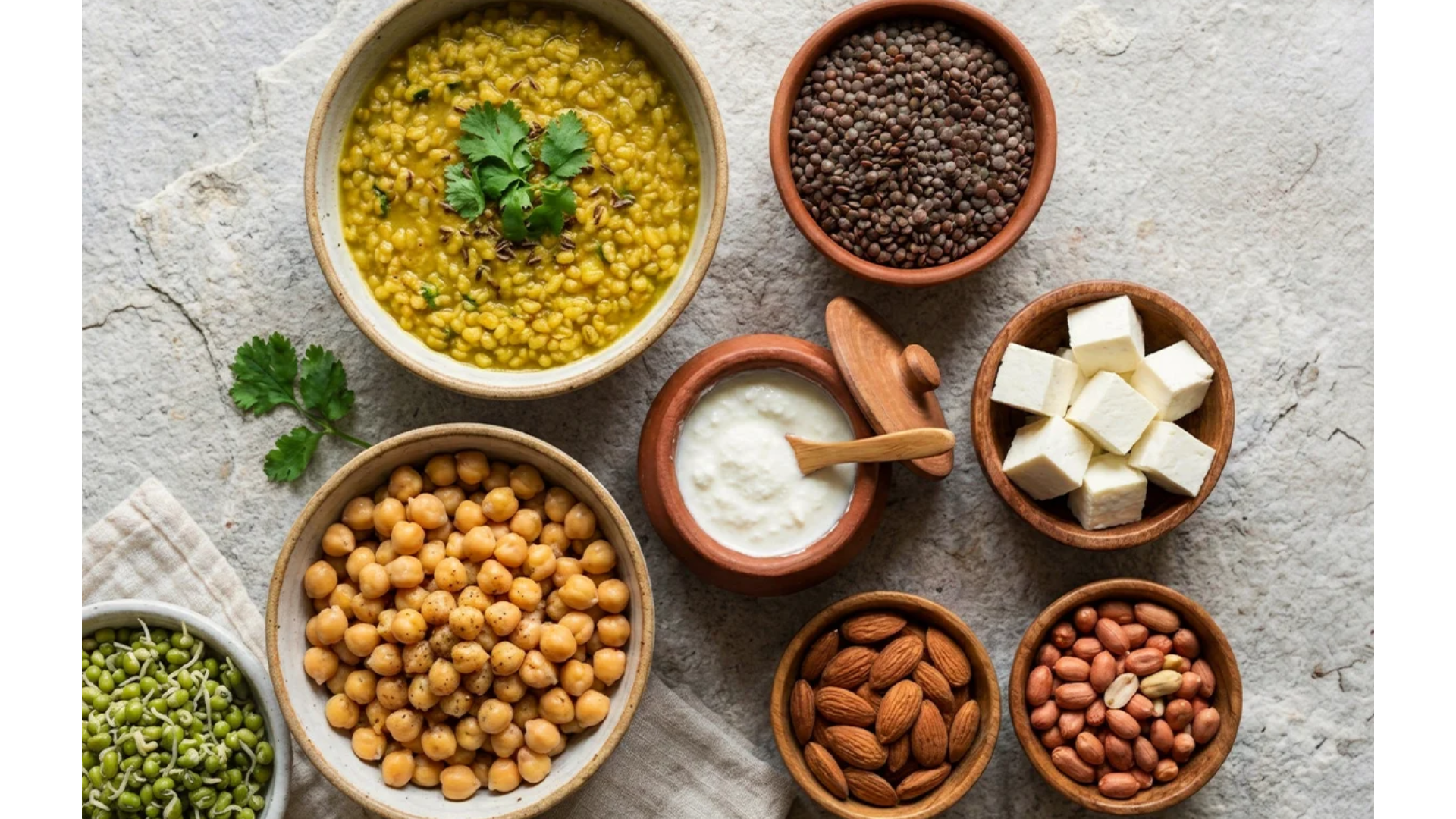
If You're Vegetarian
Eggs and dairy open up a wonderful range of options: Greek yogurt, cottage cheese, kefir, milk, eggs, cheese, tofu, tempeh, edamame, lentils, beans, chickpeas, seitan.
Vegetarian eating makes it easy to stack protein with fiber and other nutrients in the same bite. Greek yogurt with berries and chia. Eggs with vegetables and whole-grain toast. Cottage cheese with fruit. Tofu stir-fry with edamame. None of it complicated.
Sample Vegetarian Day: About 100g Protein
- Breakfast: 2 eggs scrambled with spinach + ½ cup cottage cheese + whole-grain toast — ~28g
- Snack: Greek yogurt with berries and chia seeds — ~18g
- Lunch: Lentil and quinoa bowl with roasted vegetables and feta — ~22g
- Snack: Edamame, ¾ cup — ~13g
- Dinner: Tofu and vegetable stir-fry with brown rice — ~22g
- Total: ~103g
Dairy: One of the Easiest Ways to Add Protein
Dairy is one of the most convenient proteins there is, especially when you're trying to raise your intake without dramatically raising your food volume. Greek yogurt is one of my favorites — versatile, easy, and typically loaded with protein per serving. Add berries, chia, nuts, or a little cinnamon, or use it as the base for a savory dip.
Cottage cheese is a protein powerhouse in its own right — eat it with fruit, blend it into a dip, fold it into eggs, or spoon it into a bowl. Kefir hands you protein plus a fermented-food boost for your gut health and microbiome diversity.
And don't overlook a plain glass of milk — protein, calcium, and other nutrients in one pour. Cheese contributes protein too, but it's more calorie-dense than yogurt or cottage cheese, so I treat it as a protein-containing food rather than my main protein source.
Sample Dairy-Focused Day: About 100g Protein
- Breakfast: Greek yogurt bowl with berries, chia seeds, and walnuts — ~25g
- Snack: Cottage cheese with sliced peach — ~20g
- Lunch: Large salad with grilled chicken, vegetables, and a little feta — ~30g
- Snack: Glass of milk + small handful of almonds — ~12g
- Dinner: Lentil and vegetable soup with a dollop of Greek yogurt — ~18g
- Total: ~105g
And yes, that day includes chicken — "dairy-focused" doesn't mean vegetarian. The point is just how easily dairy fills protein gaps, wherever else your day lands.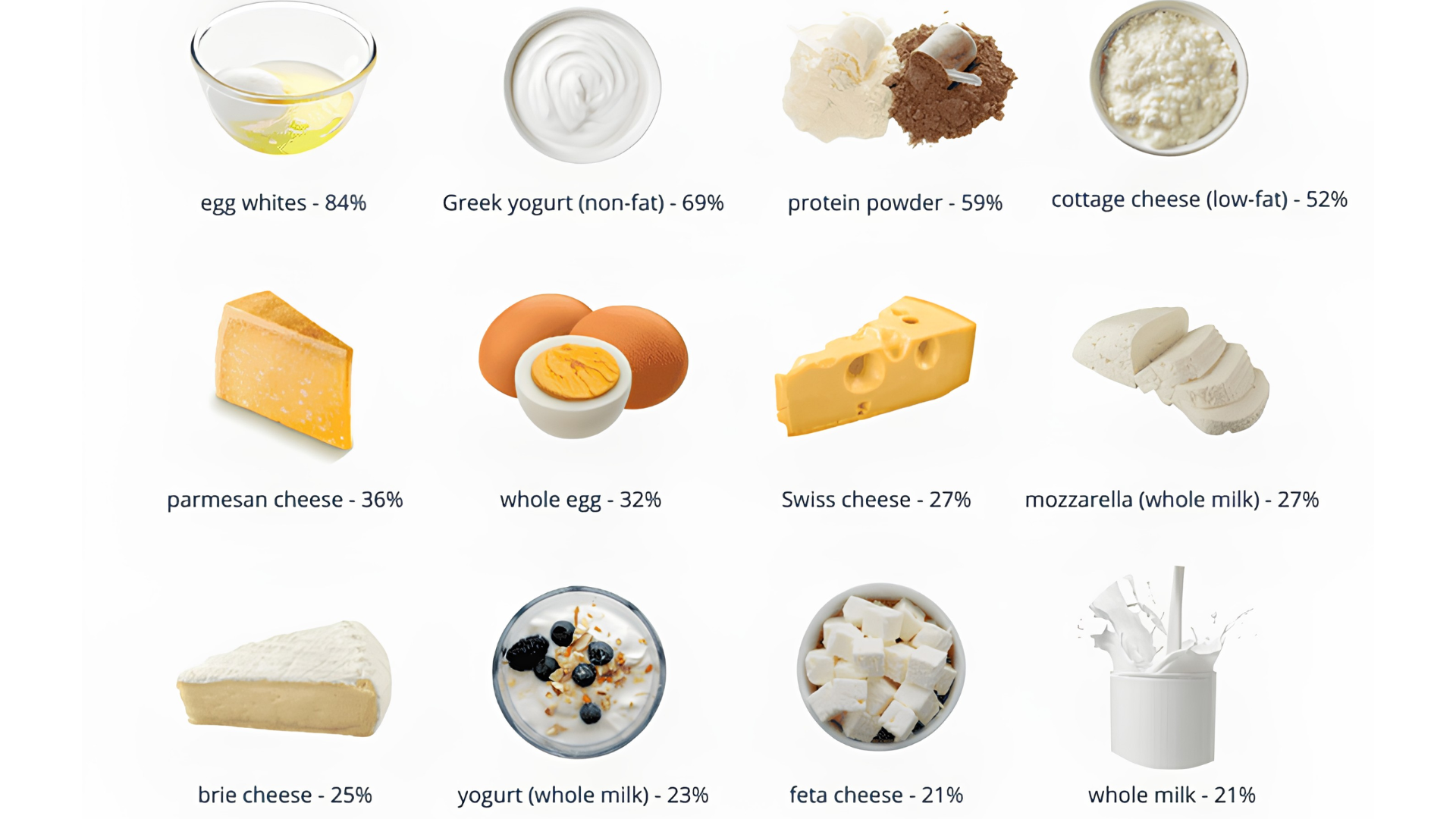
Eggs: Small but Mighty
Eggs deserve a permanent place in the midlife kitchen. A whole egg gives you protein plus fats and a spread of micronutrients. Egg whites give you a concentrated hit of protein for very few calories. You don't have to pick a side — combine them: 2 whole eggs plus a cup of egg whites makes a high-protein breakfast that still keeps the nutritional benefits of the yolks. Try it as:
- An omelet with vegetables
- Scrambled eggs with cottage cheese
- Eggs and avocado toast
- An egg-and-vegetable scramble
- Egg whites and whole eggs over leftover roasted vegetables
Breakfast is where most women fall short on protein. Eggs make it nearly impossible to.
Sample Egg-Focused Day: About 100g Protein
- Breakfast: 2 whole eggs + ¾ cup egg whites scrambled with vegetables + whole-grain toast — ~30g
- Snack: Greek yogurt with berries — ~17g
- Lunch: Egg salad made with 2 eggs + Greek yogurt, over a large salad with chickpeas — ~23g
- Snack: Cottage cheese with fruit — ~15g
- Dinner: Salmon with roasted vegetables and potatoes — ~25g
- Total: ~110g
You don't need to land on an exact number every day. Treat these as a picture of what a protein-forward day looks like, not a quota.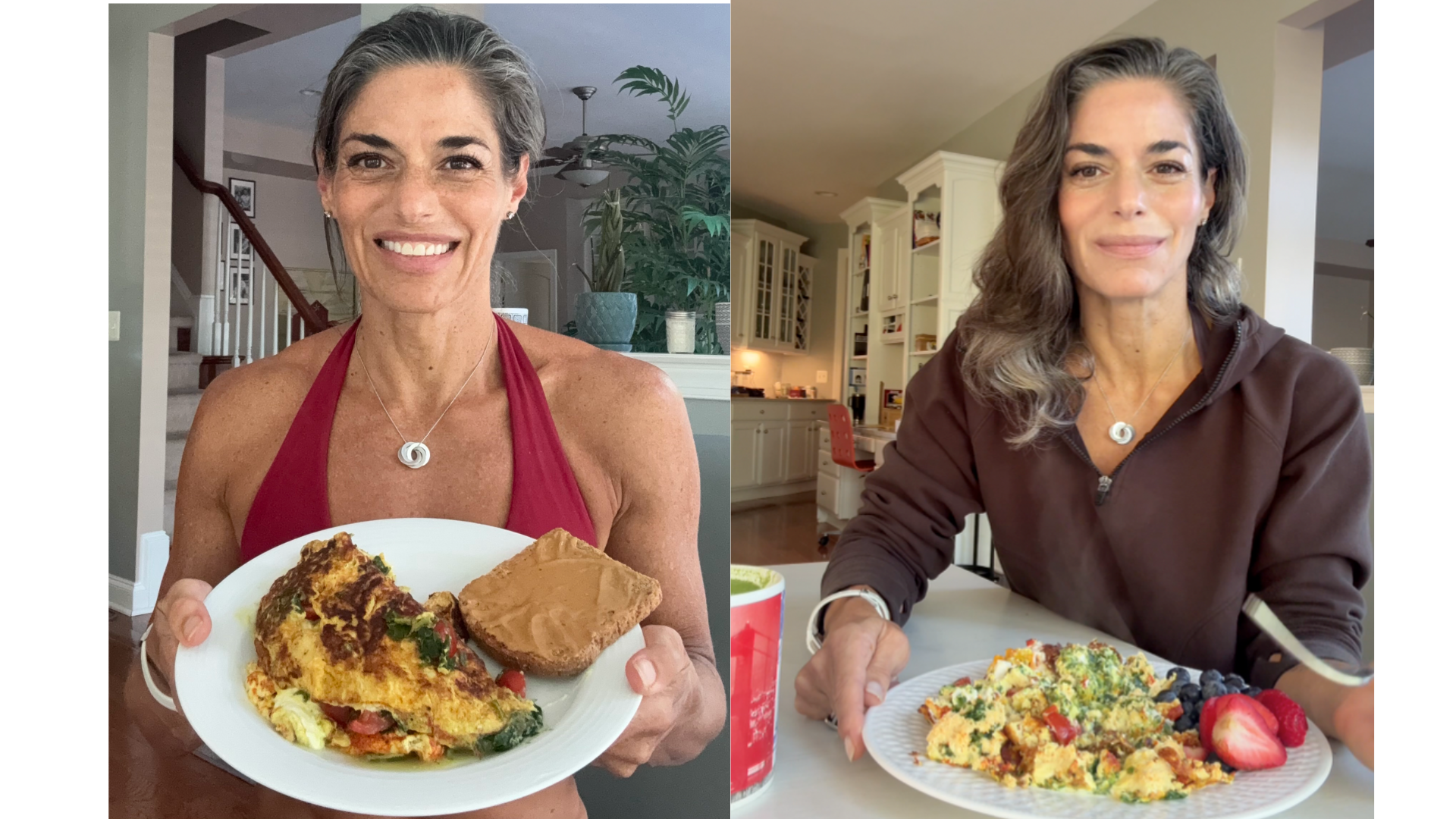
Coming Up in Part 2
That's four solid protein foundations — vegan, vegetarian, dairy, and eggs. Notice the pattern already: none of this required a strange food or an ounce-perfect scale, just knowing your number and building meals around foods you already like.
In Part 2, we'll round out your options with poultry, beef, pork, seafood, legumes, and protein powders — plus exactly how to make hitting your number a non-issue instead of a math problem.
Want the full system — nutrition, strength training, and the hormone piece behind all of it? Join the Aging Well Naturally Masterclass Waitlist → You'll be the first to know the moment enrollment opens, plus first access to any early-bird pricing or bonuses.
x Juliana
Author