
Spring Cleaning: The Psychological Power of De-Cluttering
Feb 27, 2026
There's no coincidence that you suddenly feel motivated to clean house in March.
As winter recedes and the days stretch longer, your nervous system starts to shift. Cortisol patterns adjust with earlier sunrise; you're suddenly waking up earlier. Serotonin production increases with more daylight exposure; you feel more energized. With this returning energy comes an inexplicable yet visceral need to clean. Why?
Clutter feels heavier in spring. It's as if you're noticing it more.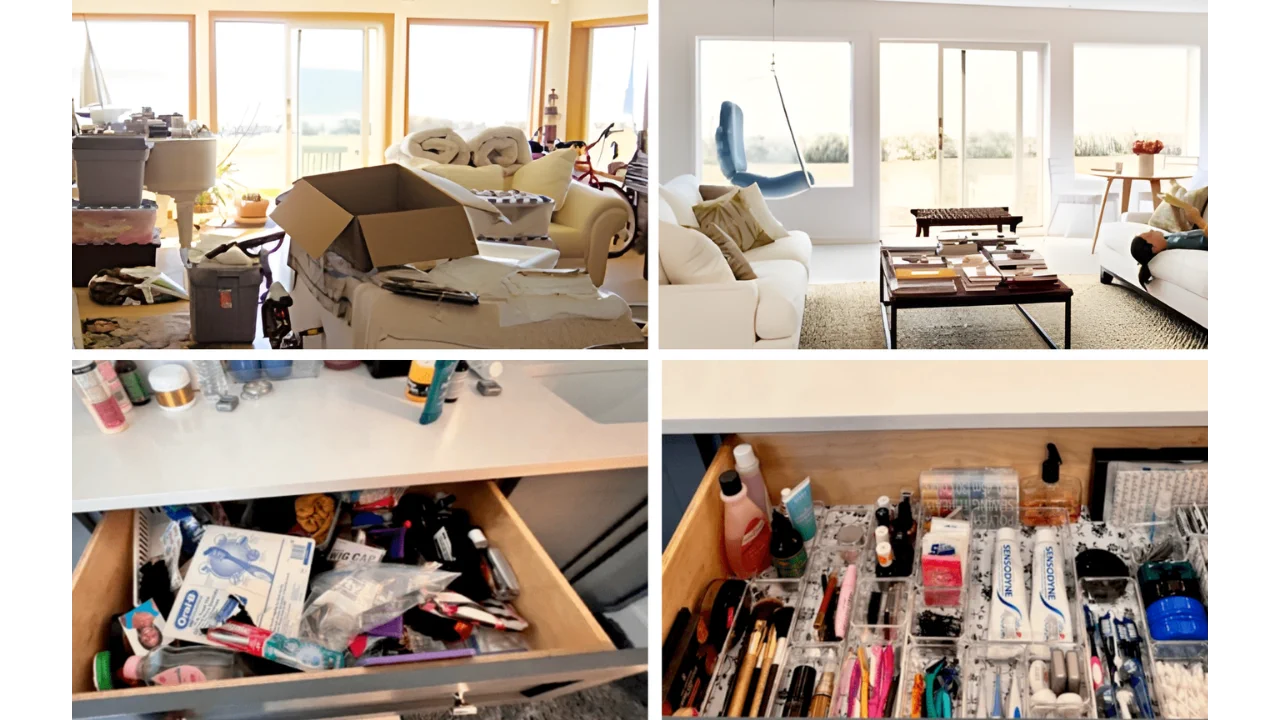
See, the human brain is highly triggered by visual input. Every object within view is processed at some level. The prefrontal cortex — the area responsible for focus, planning, and decision-making — filters and prioritizes what deserves attention. When surfaces and countertops are crowded, that filtering system works continuously. Even if you aren’t consciously thinking about the stack of mail or the overfilled drawer, your brain is still managing it.
This is called cognitive load.
When cognitive load increases, working memory decreases. That means fewer mental resources are available for deeper thinking, creative work, and sustained focus. Tasks feel larger. Overwhelm creeps in. Decisions feel heavier. 
But clearing space reduces incoming stimuli. Fewer visual cues mean less background processing. The prefrontal cortex regains capacity, and attention steadies. Many people describe this as “feeling clearer,” but what’s happening neurologically is a redistribution of mental energy.
You know this if you're like me, and if you have a big project due but can't seem to motivate so you suddenly start cleaning your office. This isn't procrastination; it's subconsciously reducing cognitive load so you can work.
There is also a profound nervous system component.
The amygdala continuously scans for irregularities and unpredictability. Environments that feel chaotic or unfinished require more monitoring. Monitoring keeps the body in a low-grade state of alertness. It's subtle, but measurable — slightly elevated heart rate variability patterns associated with vigilance, slightly higher cortisol output across the day.
Whereas order signals safety.
I remember once my teenage daughter was feeling overwhelmed and home sick from school. I walked into her room: curtains drawn, piles and piles of clothes everywhere, overflowing trash can, clutter. I calmly resisted the urge to scream 😱 and instead tidied. Clothes went in the hamper and down to the laundry room. Trash got taken out. Curtains opened, letting sunshine in. Clutter got organized and filed away. It took less than 15 minutes but she looked up at me, amazed: within that 15 minutes her nervous system registered calm.
So healing could begin.
Predictable, structured environments reduce the need for scanning. The parasympathetic nervous system — responsible for restoration, digestion, and focused engagement — becomes more active. Energy shifts from high-alert reactivity toward steady, usable activation. Focus strengthens. Follow-through improves.
Decluttering is not only about removing objects; it is about changing the brain’s relationship to its surroundings.
The act itself matters.
Each decision — keep, donate, discard — activates executive function circuits. Completion of a small task releases dopamine, reinforcing a sense of agency. Agency builds capability. Capability builds confidence. When you clear one drawer and see immediate order, the brain registers a successful action cycle. That success becomes easier to repeat.
Over time, the environment begins to cue behavior. A clear kitchen counter encourages cooking. An open stretch of floor invites movement. A simplified desk signals readiness to write. The space shapes the habit.
Spring cleaning is often framed as aesthetic or practical, but it's neurological.
As daylight increases and vitality returns, your brain is primed for engagement. Removing excess stimuli allows that energy to consolidate rather than disperse. Instead of pushing motivation, you create conditions where action feels natural.
Decluttering doesn't create discipline; it creates a peaceful setting for creative work to take hold.
So this is your sign to clean out your workspace, arrange your closet, tidy the pantry. Let the new come in.
Over to you: will you be decluttering anytime soon? Let me know in the comments below!
x
Juliana
PPS - if you enjoyed this blog post and you're not yet subscribed to our newsletter, sign up for our monthly newsletter! We drop aging well strategies on nutrition, exercise, sleep, HRT, clean beauty, facial exercise & more.
Author