
PART 1: Trying to Lose Weight But the Scale Won't Budge? Let's Talk About INSULIN
Jun 08, 2026
This is Part 1 of a two part series on weight loss & insulin; you can access Part 2 here.
You've been doing everything right. You're eating less. You're moving more. You've cut the wine, you're tracking your calories, you're choosing the salad when you want the pasta. And the scale is not moving. Or worse — it's creeping up.
If this is you: we gotta talk about insulin, because you're blaming yourself but the issue isn't your discipline. It isn't your effort or some unbeknownst character flaw that makes weight loss harder for you than everyone else. The problem is your insulin. And nobody is talking about it.
The Calorie Myth
For decades we've been told that weight loss is a simple equation. Calories in, calories out. Eat less, move more. Create a deficit and the weight comes off. And if it doesn't come off? Well, then obviously you're at fault, you're either eating more than you think you are (you glutton!) or moving less than you think you are (you sloth!) for shame! End of story.
Except that's not quite the truth.
That equation completely ignores the hormonal environment inside your body — and specifically, it ignores the one crucial hormone that controls whether your body burns fat or stores it. Insulin.
Truth bomb: you can be eating in a calorie deficit and still not lose weight if your insulin is chronically elevated. Let's read that again, so it lands: you can calorie-restrict all you want, but if your insulin is high, you're in fat-storage mode, and the weight won't come off. The calories-in-calories-out model assumes all calories behave the same way in your body. They don't. What matters isn't just how much you're eating. It's what you're eating, and what that food is doing to your hormones.
What Insulin Actually Does
Insulin is a hormone your pancreas releases every time blood glucose rises — which happens every time you eat carbohydrates or protein. Its job is to act like a key, unlocking your cells so glucose can get inside and be used for energy.
When this system is working well, it's elegant. You eat, blood sugar rises, insulin gets released, glucose enters your cells, blood sugar drops back down, insulin levels fall. Bada bing, bada boom. Clean cycle. Efficient system.
But when insulin is chronically elevated — never fully coming back down between meals — your body is stuck in a permanent state of fat storage. Let me say that again, for the folks in the back: when insulin is high, fat burning is essentially switched off. Your body cannot access its stored fat for fuel. It doesn't matter how little you're eating. The hormonal signal to store fat is louder than any calorie deficit you can create.
This is why the woman who eats 1,400 calories of processed food, snacks constantly, and drinks sweetened coffee all day can't lose weight. And the woman eating 1,800 calories of protein, vegetables, healthy fats, and whole foods does. The calories tell one story. The insulin tells the real one.

Why This Hits Harder in Midlife
If you're in perimenopause or beyond, this complicates things. Let's talk about why.
Estrogen has a protective effect on insulin sensitivity. It helps your cells respond efficiently to insulin's signal. When estrogen drops in perimenopause, cells become less responsive — that's insulin resistance — and your pancreas has to produce more and more insulin to do the same job. So even if your diet hasn't changed at all, your insulin levels are higher than they were five years ago. Your body is in fat storage mode more of the time, and the fat is landing preferentially in your midsection.
This is not a willpower problem. This is the effect of higher insulin.
So the goal isn't eating less. The goal is keeping insulin lower.
What Drives Chronically High Insulin?
If insulin is the problem, what's driving it up in the first place?
Sugar and refined carbohydrates are the most aggressive drivers. Talk to me, Amanda, because we both know sugar is bad but the frappucinos, the cheat-day treats, the chocolatey-snacky-snacks: they hit your bloodstream fast and hard — there's no fiber to slow the absorption — causing sharp, dramatic insulin spikes. The glucose half of sugar spikes insulin immediately. The fructose half, found in table sugar, high-fructose corn syrup, and virtually every ultra-processed food, gets processed by the liver and drives insulin resistance over time. Both are working against you, just on different timelines.
Constant snacking is the other major culprit. Insulin rises after every meal and then settles back down. That settling — that quiet window between meals — is when insulin falls low enough for fat burning to resume. If you're grazing all day, insulin never gets that chance. Every snack, every handful of crackers, every sweetened coffee is another spike. Another reset. Another delay before your body can access its stored fat.
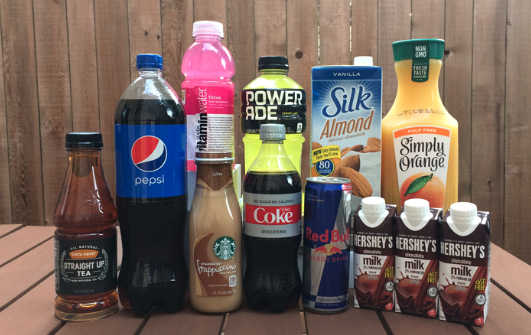
Liquid sugar is particularly brutal. Think about what we consume beverage-wise: all the juice, sweetened coffee drinks, sports drinks, flavored teas — your body processes them faster than almost any other form of sugar because there's zero fiber to blunt the sugar, so the insulin spike is immediate and massive. And liquid calories don't register as fullness the way food does, so you're getting all the metabolic damage with none of the satiety.
Poor sleep and chronic stress compound everything. Cortisol — your stress hormone — raises blood sugar directly. More blood sugar means more insulin. And one bad night of sleep can reduce insulin sensitivity by as much as 25% the next day. So if you're stressed, under-slept, and reaching for sugar to get through the afternoon? You're fighting a losing battle and insulin is winning.
The Real Goal: Lower Your Insulin
So, our new reframe: The goal is not to eat less. The goal is to spike insulin less.
When you shift your focus from calorie restriction to insulin regulation, everything changes. You stop obsessing over tiny portions of foods that are actively working against you and start building a plate that keeps your blood sugar stable and your insulin low. You stop snacking constantly and start giving your body windows of quiet where fat burning can actually happen. You stop drinking your sugar and start treating every liquid as an opportunity to support your metabolism rather than sabotage it.
The practical levers are straightforward. Protein and fiber at every meal — they blunt the blood sugar spike and keep you satiated so cravings don't win. No snacking between meals where possible — let insulin fall. Eliminate liquid sugar entirely (um, this includes sugary cocktails like margaritas and even wine). Cut the refined carbs and ultra-processed food that are spiking you fast and hard. And take a ten-minute walk after meals — your muscles absorb glucose directly during movement, no insulin required, flattening your blood sugar curve before it has a chance to spike.
And Then There's Muscle
What does strength training have to do with this? A lot, actually. Your muscles are a glucose sink. The more muscle you have, the faster and more efficiently your body clears glucose from your bloodstream after a meal. More muscle means more GLUT4 transporters — the doors that let glucose into your cells — which means blood sugar drops faster, your pancreas doesn't have to flood your system with as much insulin to get the job done, and insulin levels come back down more quickly after every meal.

This is why strength training is foundational to thriving in midlife. It's not just about looking toned or burning calories. It's insulin sensitivity training. Every pound of muscle you build means you have a larger glucose sink, which means lower insulin spikes after meals, and more time spent in fat burning mode. Less sugar in your diet and more muscle on your body are solving the same problem from two different directions. Together they are extraordinarily powerful.
The Bottom Line
If the scale won't budge and you've been blaming yourself, stop. Ask a different question. Not how much am I eating? but what is my insulin doing?
Because you can out-restrict yourself into exhaustion and still not lose weight if your hormonal environment is working against you. But when you get your insulin under control — through the foods you choose, the way you time your meals, the muscle you build, the walks you take after eating — your body finally gets the signal it's been waiting for.
Fat burning mode. Unlocked.
But how do I break up with sugar, Juliana? That seems crazy hard.
I'm so glad you asked. I just built a FREE How to Break Up With Sugar guide that walks you through exactly how to lower your insulin through diet, movement, and strategy. Does this work? Heck yes, because this is what I used to unhinge myself from my sugar addiction and what I deploy today whenever I feel a sugar craving coming on. 10 steps, 10 strategies to help you get rid of that sugar monkey on your back. Totally free. Click below to download it.
And one more thing.
Everything I just walked you through — the insulin mechanism, the estrogen connection, the muscle piece, the practical levers — this is exactly the kind of content that lives inside my upcoming Aging Well Naturally Masterclass that I'm launching this summer.
Eleven modules: Nutrition. Strength training. Sleep. Stress. Hormones. Clean beauty. Movement. All of it built specifically for midlife women who are done feeling frustrateed and guessing their way into wellness and are ready to actually address what's happening in their bodies.
This isn't a diet plan. It isn't a 30-day challenge. It's the complete picture of how to age well naturally — with the science, the strategy, and the specificity that most wellness content never gives you.
If this blog post made something click for you, the masterclass is where we go deep.
I'll be sharing more details soon. You're on the list, so just keep an eye on your inbox. You're not going to want to miss this one.
x Juliana
Author