
Why Energy Depletes in Midlife (Part 2): What to Ask Your Doctor
Oct 29, 2026
Okay Juliana, I Did the Work. Why Am I Still Tired?
Last week in Part 1, I asked you to do something deceptively simple: rate your energy from 1 to 10 at 9am, 3pm, and 9pm for three days. That's your baseline. Then, rather than overhauling your whole life on a Monday (and quitting by Thursday), change ONE thing at a time for two weeks and watch what happens to your numbers.
Why go to all that trouble? Because lagging energy in midlife almost never comes down to one thing. Shifting hormones, sleep that falls apart, a little muscle lost every year, under-eating, stress: they stack. In Part 1, I walked you through the everyday changes I'd test first to pull that stack apart, from eating enough (with 30 to 40 grams of protein at every meal) to lifting heavy, walking after meals, cutting caffeine at noon, and keeping your bedroom cool and dark.
So maybe you started your energy log. You're getting your protein in, walking after dinner, cutting the caffeine at noon, and putting your phone down an hour before bed. And maybe your numbers are moving (if so, I LOVE that for you!). But maybe they're not moving as much as you hoped. Or your 3pm score is still sitting at a 3 no matter what you've changed.
I get it. Doing all the things and still dragging yourself through the afternoon is so frustrating.
When that happens, it's usually a sign that one of the pieces in your stack has a cause that protein and walking can't fix on their own: a thyroid that's slowing down, iron stores running on empty, a vitamin D level that's been low for years, or a medication with fatigue as a side effect. Those show up in your bloodwork, and that's exactly where we're going today.
If you missed Part 1, start there: Why Energy Depletes in Midlife (Part 1): What You Can Do About It. It walks you through the 18 everyday changes to food, movement, sleep, and stress I'd test first, plus how to set up the energy log so you know what's working.
This part is for when your inputs are dialed in and something still feels off. We're going to talk about the labs to ask your doctor for and what the numbers mean, what to look at in your medications and your mood, and the three supplements worth testing (one at a time!). Screenshot this list or print it out, and walk into your next appointment with it and your energy log in hand.

What Should I Ask My Doctor to Test?
Some fatigue has a medical cause that no amount of protein or walking will fix. Book the appointment and ask about these:
1. Thyroid. Ask for TSH, plus free T4 if needed. Better yet, ask for the full picture: TSH, free T4, free T3, and TPO antibodies. Thyroid changes are common in midlife and look a LOT like plain old exhaustion. About 1 in 8 women will develop a thyroid problem in her lifetime, and the most common cause, Hashimoto's, is an autoimmune condition where your immune system slowly attacks your thyroid. The TPO antibody test can catch it years before your TSH looks off. An underactive thyroid looks like this: exhausted no matter how much you sleep, always cold, constipated, dry skin, thinning hair or eyebrows (especially the outer edges), weight creeping on, brain fog, and low mood. Sound familiar? That's also the perimenopause checklist, which is exactly why it gets missed. Ask for copies of your results every year and watch the trend: a TSH that creeps up over a few years is worth a conversation, even if it's still inside the lab's normal range. One more tip: if you take biotin (it's in a lot of hair, skin, and nails supplements), stop it 2 to 3 days before your blood draw, because it can throw off your thyroid results.
2. Testosterone. Yes, women make it too, and we make more of it than estrogen! Your levels drift down gradually from your 20s on, so by your 40s you’ve got roughly half of what you had at 21. Low testosterone can show up as flat energy, low motivation, low drive, and a harder time building muscle even when you’re lifting. Ask for total testosterone and SHBG (the protein that binds it up so your body can’t use it). FYI, the pill and oral estrogen both raise SHBG, which leaves you with less free testosterone to work with. Go in knowing this: there’s no agreed-upon “normal” range for women, and right now the strongest evidence for testosterone therapy in women is for low libido, not energy. So bring your energy log and your symptoms to that appointment along with the lab work, and have the whole conversation.
3. Iron and ferritin. Ask for a CBC and ferritin, especially if you have heavy periods. Ferritin is your stored iron (think of it as your iron savings account), and it can run low long before you're technically anemic. A lot of labs call ferritin "normal" all the way down around 15, but plenty of women feel wiped out, get winded on the stairs, and notice their hair shedding when they're under 30. So always ask for your actual number. Heavy periods in perimenopause are a big cause, and so is eating mostly plant-based. If you're low, red meat, clams, oysters, and mussels give you the most absorbable iron, and plant sources like lentils, beans, and spinach absorb better with vitamin C on the plate (squeeze lemon on it, add peppers or strawberries). Keep coffee, tea, and calcium supplements an hour or two away from your iron-rich meals or your iron pill, because they block absorption. Don’t start iron on your own without a result; too much is harmful. And once your periods stop, your iron needs drop way down, from 18 mg a day to 8, so a lot of postmenopausal women are taking iron they don't need.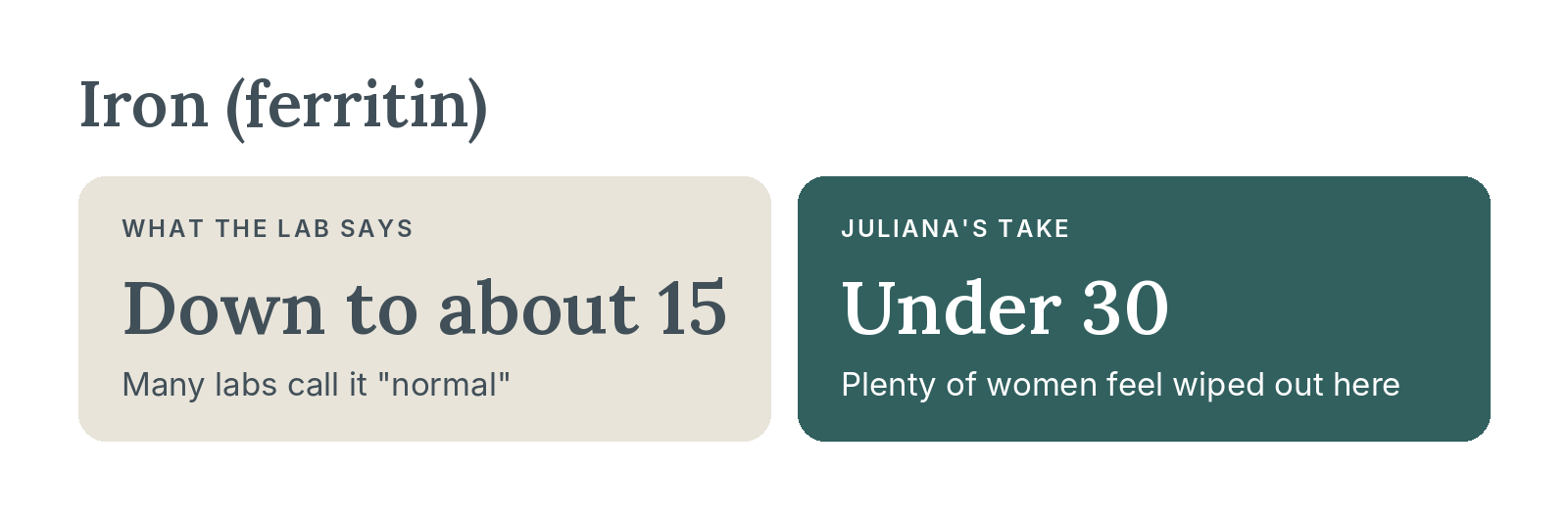
4. B12. Levels drop as we age and with certain medications. B12 helps you make healthy red blood cells and keeps your nerves working, so when it's low you get tired, foggy, and moody, and you might notice pins and needles in your hands and feet or feel a little off balance. To absorb B12 from food, you need enough stomach acid, and that drops with age. The big medication culprits are metformin and acid reducers like omeprazole (Prilosec) and pantoprazole, which a LOT of women in midlife take for years. If you eat mostly plant-based, your risk is higher, too. Ask for a serum B12 test, and if it comes back at the low end of normal, ask for a methylmalonic acid (MMA) test; it's a more sensitive way to tell whether your body is short on B12 where it counts. Food sources: clams (off the charts!), salmon, beef, eggs, dairy, and fortified nutritional yeast. If you supplement, a sublingual (under-the-tongue) B12 is an easy option.
5. Vitamin D. Ask for a 25-OH vitamin D test. This is the one I really want you to ask for, because the vast majority of women are low. Studies estimate roughly 3 out of 4 American adults are under 30 ng/mL, and almost nobody gets to an optimal level without supplementing. Vitamin D works more like a hormone than a vitamin: you have receptors for it all over your body, including your muscles, your immune system, your brain, and your bones. It helps you absorb calcium and supports muscle strength, and low levels are linked to fatigue, low mood, achy muscles, and getting sick all winter. And it's fall! If you live in the northern half of the US, the sun is too weak from roughly October through March for your skin to make much vitamin D at all, no matter how long you're outside.
Most labs call anything over 30 ng/mL “normal.” At a minimum, I want you at 60, and I'd love to see you between 60 and 90. (If your lab uses nmol/L, that's 150 to 225.) To get there, take vitamin D3 plus K2. D3 is the form your skin makes from sunlight, and it raises your blood levels more effectively than D2. Here's how the two work together: D helps you absorb calcium from your food, and K2 activates the proteins that move that calcium into your bones and teeth and keep it out of your arteries, where you DON'T want it. Look for K2 in the MK-7 form (usually 100 to 200 mcg), and take both with a meal that has some fat in it, since they're fat-soluble. Your D3 dose depends on where you're starting, so work it out with your doctor (a lot of women need 2,000 to 5,000 IU a day to climb), then retest in about three months to see where you land. Two heads-ups: if you take a blood thinner like warfarin, talk to your doctor before you start K2, because it can interfere with how the drug works. And vitamin D builds up in your body over time, so testing is how you know you're in range.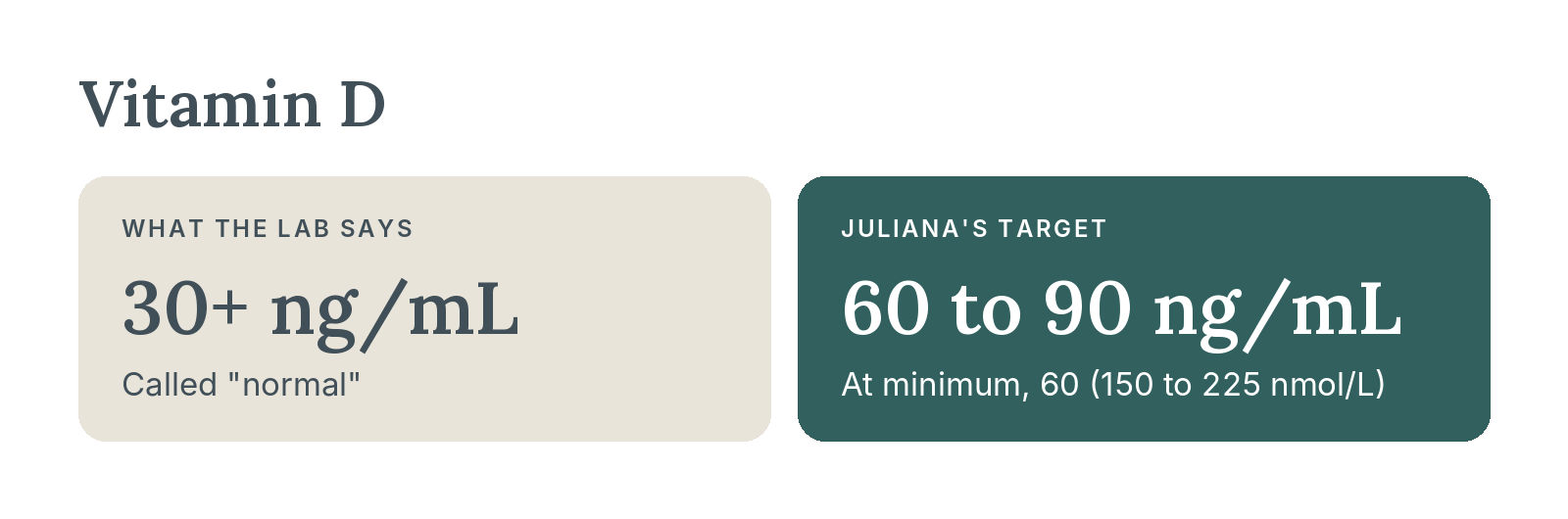
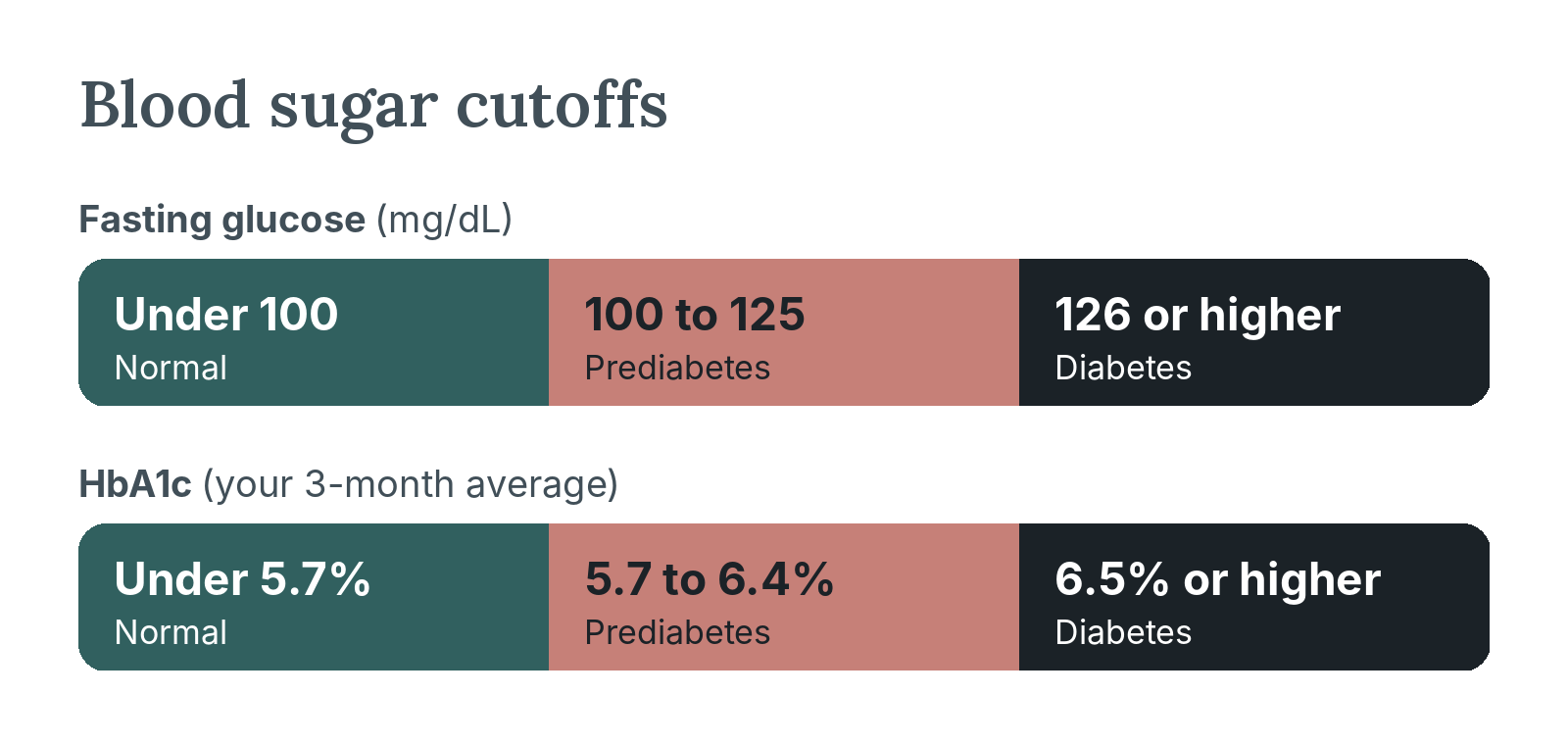
6. Blood sugar. Fasting glucose and HbA1c tell you if your blood sugar is running high. Fasting glucose is a snapshot of your blood sugar first thing in the morning, before you eat. Under 100 mg/dL is normal, 100 to 125 is prediabetes, and 126 or higher means diabetes. HbA1c shows your average blood sugar over the past three months: under 5.7% is normal, 5.7 to 6.4% is prediabetes, and 6.5% or higher means diabetes. Ask for fasting insulin too, because most doctors don't run it automatically. Your insulin can climb for YEARS while your glucose still looks perfect, because your pancreas is working overtime to keep it there. That's insulin resistance, and the earlier you catch it, the easier it is to turn around. With your fasting insulin and fasting glucose, your doctor can calculate your HOMA-IR, a simple insulin resistance score (under about 2 is where you want to be). So why does this matter for your energy? As estrogen drops, our cells get less sensitive to insulin, so the same lunch you've eaten for 20 years can now send your blood sugar up fast and drop it just as fast: hello, shaky, hangry, need-a-snack-NOW 3pm crash. Want to watch it happen in real time? Over-the-counter continuous glucose monitors like Stelo and Lingo let you wear a sensor for two weeks and see exactly how your meals, your walks, and your sleep move your numbers.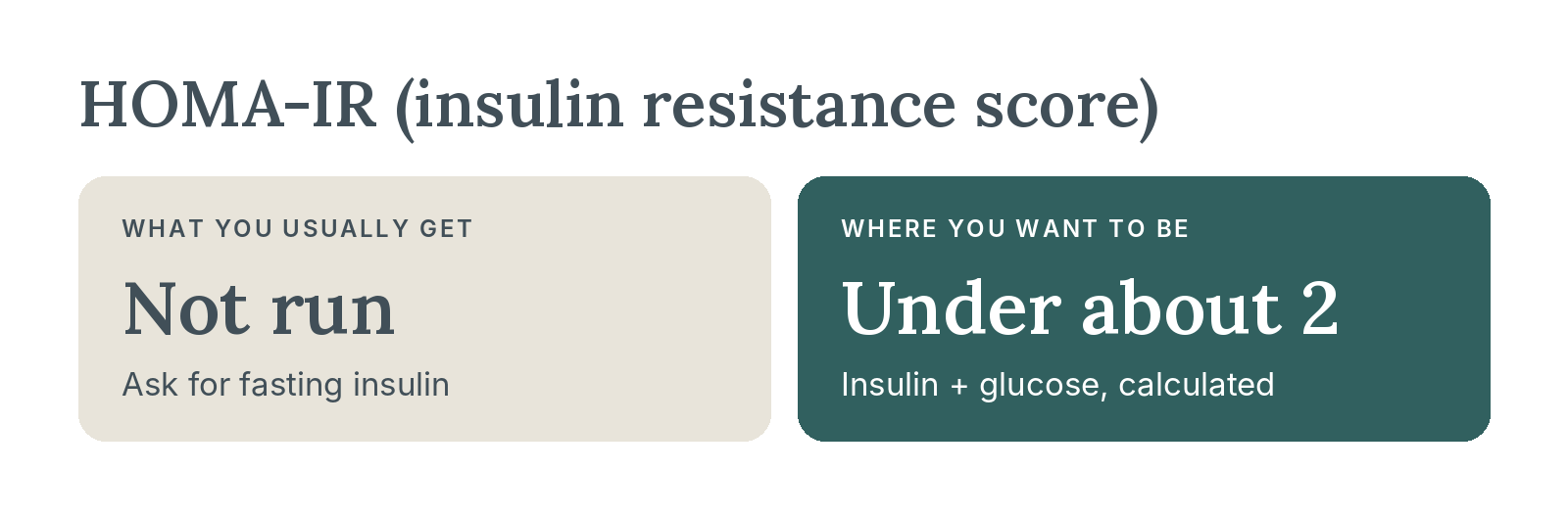
7. Your medications. Allergy meds, some blood pressure meds, some antidepressants, and sleep aids can all drain your energy. Bring the full list (supplements too) to your doctor or pharmacist. Antihistamines like diphenhydramine (Benadryl, and it's hiding in a lot of “PM” pain relievers) can leave you groggy well into the next day. Beta blockers like metoprolol and atenolol can flatten your energy and cap how hard you can push in a workout. Some anti-anxiety meds and muscle relaxants can do the same. Acid reducers and metformin can drain your B12 (see #4), and long-term acid reducers can lower your magnesium, too. Ask your pharmacist for a “brown bag” review: put everything you take in a bag (prescriptions, over-the-counter, supplements) and they'll check it for side effects and interactions. It's usually free. And please don't stop anything on your own; ask whether a different dose, a different time of day, or a different option could work better for you.
8. Your mood. Low energy, low motivation, and bad sleep overlap with depression, and so many women don’t realize that’s what’s going on. Perimenopause is one of the highest-risk times in a woman's life for depression, even if you've never had it before, because shifting estrogen affects the brain chemicals that regulate your mood. And it doesn't always look like sadness. It can look like losing interest in the things you used to love, snapping at everyone, crying out of nowhere, feeling numb, or dragging yourself through every day. The PHQ-9 is a quick questionnaire you can take and share with your doctor. It's nine questions about the last two weeks, scored from 0 to 27, and a score of 10 or higher is a clear sign to book that appointment. Depression is very treatable, with options ranging from therapy and medication to hormone therapy for some women in perimenopause. And if you've had any thoughts of hurting yourself, please reach out today: call or text 988 if you're in the US.
What About Supplements, Juliana?
One at a time, four to eight weeks each, nothing else changing, and run it by your doctor first if you take any medications.
9. Creatine. The research in midlife women is growing, especially if you lift. Creatine helps your muscles recharge ATP (the energy your cells run on) during hard efforts, so you can push out an extra rep or two, and those extra reps add up to more strength and more muscle over time. It works WITH your lifting, so keep lifting! There's also exciting early research on creatine for brain energy, mood, and those days you're running on bad sleep. Take 3 to 5 grams of creatine monohydrate every day (timing doesn't matter, and you don't need to “load”). Look for a brand that's third-party tested, like NSF Certified for Sport or Informed Sport. You might see a pound or two on the scale in the first few weeks: that's water going into your muscles, which is exactly where you want it.
10. Magnesium. Evidence for sleep and energy is mixed, and it’s a common one to test. Magnesium is involved in hundreds of reactions in your body, including making energy, relaxing your muscles, and calming your nervous system, and nearly half of American adults don't get enough from food. The form matters: magnesium glycinate is gentle and calming and the go-to for sleep, citrate works more like a laxative (great if you're constipated, less great if you're not), and oxide is cheap but poorly absorbed. Try 200 to 400 mg of glycinate in the evening. And eat it, too: pumpkin seeds, almonds, spinach, black beans, and dark chocolate are all great sources. If you have kidney issues, check with your doctor first.
11. Omega-3s. Great for heart health; the energy benefit is less clear. Omega-3s (EPA and DHA) help calm inflammation and support your brain, your mood, and your joints. When you buy fish oil, flip the bottle over and add up the EPA and DHA per serving, because a “1,000 mg fish oil” capsule might only have 300 mg of the good stuff. Aim for about 1 to 2 grams of EPA plus DHA combined. Keep it in the fridge, and if it smells fishy or gives you fishy burps, it may have gone rancid. Food first: salmon, sardines, mackerel, anchovies, and herring twice a week. You can also ask for an Omega-3 Index test (there are at-home kits), and 8% or higher is the target. If you're on a blood thinner, check with your doctor before taking higher doses.

And please, see your doctor sooner rather than later if your fatigue comes with unexplained weight loss, shortness of breath, chest pain, heavy bleeding, or feeling down most days.
So here’s your homework: book the appointment. Bring this list, your energy log, and your full medication list (supplements too), and ask for your actual numbers on every test. If you haven't started your energy log yet, go back to Part 1 and start it tomorrow morning, because walking into your doctor's office with three days of real scores beats “I'm just tired all the time” every single time. Future You is going to want those numbers.
That’s all for today; go be great~
x
Juliana
Author