
Creatine: The Most Valuable and Underrated Supplement for Women in Midlife
Oct 16, 2026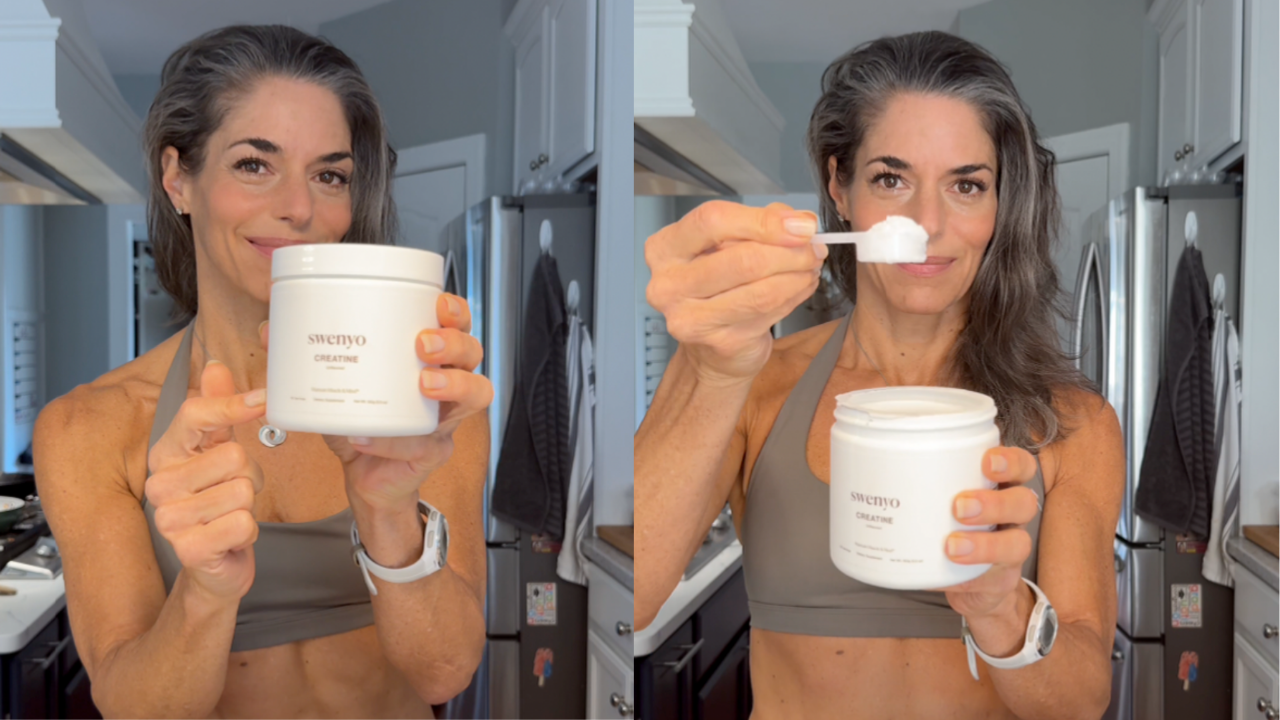
What if I told you there's a supplement that can grow muscle, without you even doing a thing? Read that again, and no, it's not April Fools Day. It's also not too good to be true. It's creatine.
For years, creatine lived in the locker room, marketed to young men chasing bigger biceps. Meanwhile, women who could likely benefit from it the most were excluded from the vast majority of studies. That's finally changing, and the research on creatine for women over 40 is some of the most exciting I've read in a long time.
If you take one supplement beyond your protein, I'd make it this one. Here's why it works, why it matters so much more for us in midlife, what the research shows, and how to pick a good one.
What creatine actually does
Creatine is a compound your body makes on its own, mostly in the liver and kidneys, and stores mostly in your muscles, with the rest in your brain. You also get a little from food, mainly red meat and fish.
Its job is fast energy. Every cell in your body runs on a fuel called ATP, and when you do something hard (a heavy set of squats, sprinting up the stairs, carrying groceries in from the car) your muscles burn through their ATP in seconds. Creatine is stored in your cells as a quick-access reserve that recharges ATP almost instantly. More creatine in the tank means more energy for every set, so you can push a little harder and recover faster between efforts. Over weeks and months, that extra work is what tells your body to build muscle.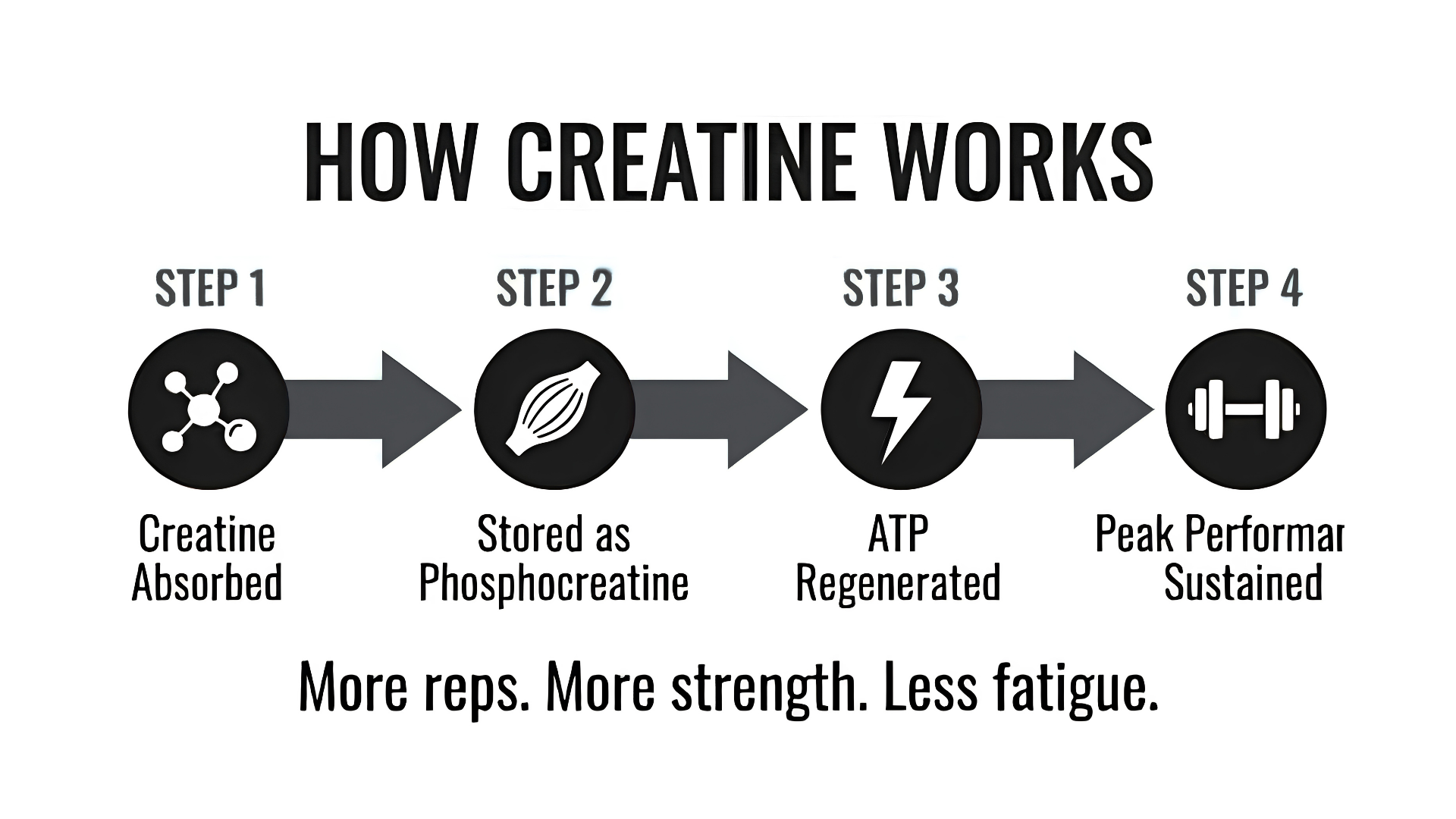
Your brain runs on the same energy system, and it's a hungry organ. That's why researchers have gotten so interested in what happens to focus, memory and fatigue when brain creatine goes up.
Why women in midlife need it more
Creatine helps everyone, but a few things make it especially valuable for us right now:
- We start with less. Women naturally carry less creatine than men, and we tend to eat less of the foods it comes from. If you eat little or no meat, your stores are likely even lower.
- Estrogen used to help. Estrogen supports how our muscles build and hold on to strength. As it declines through perimenopause and menopause, we lose some of that support.
- Muscle loss speeds up. Muscle loss accelerates during the menopause transition, right when we need muscle most for our metabolism, our blood sugar and protecting our joints.
- Food alone won't get you there. Getting 3 to 5 grams of creatine a day from food would take more than two pounds of steak or salmon. Every single day.
So at the exact moment our bodies make muscle harder to build and keep, most of us are running low on one of the most effective tools for building it.
The benefits of creatine for women
Stronger muscles, especially when you lift. A 2026 study from Texas A&M followed adults aged 45 to 65 for 12 weeks. Half of them stayed sedentary; the other half followed a strength-and-cardio program three times a week with a modest calorie deficit. Within each group, people took either creatine or a placebo.
The people who took creatine without exercising still gained about 2.4 pounds of lean tissue and got stronger on the leg press and bench press. Read that again, because what the what?! But it's true. And the people who took creatine AND trained gained nearly 3 pounds of lean tissue while losing fat. And the placebo group doing the exact same program? Their lean tissue barely moved.
This a big deal, Amanda. In midlife, a calorie deficit usually costs you muscle along with the fat, which is how so many women end up smaller but softer and weaker. In this study, creatine helped people hold on to their muscle and build more while the fat came off. Some of that early gain is water, which creatine pulls into your muscles, but the strength gains show it isn't only water. And across the research, the best results consistently show up when creatine is paired with strength training and enough protein.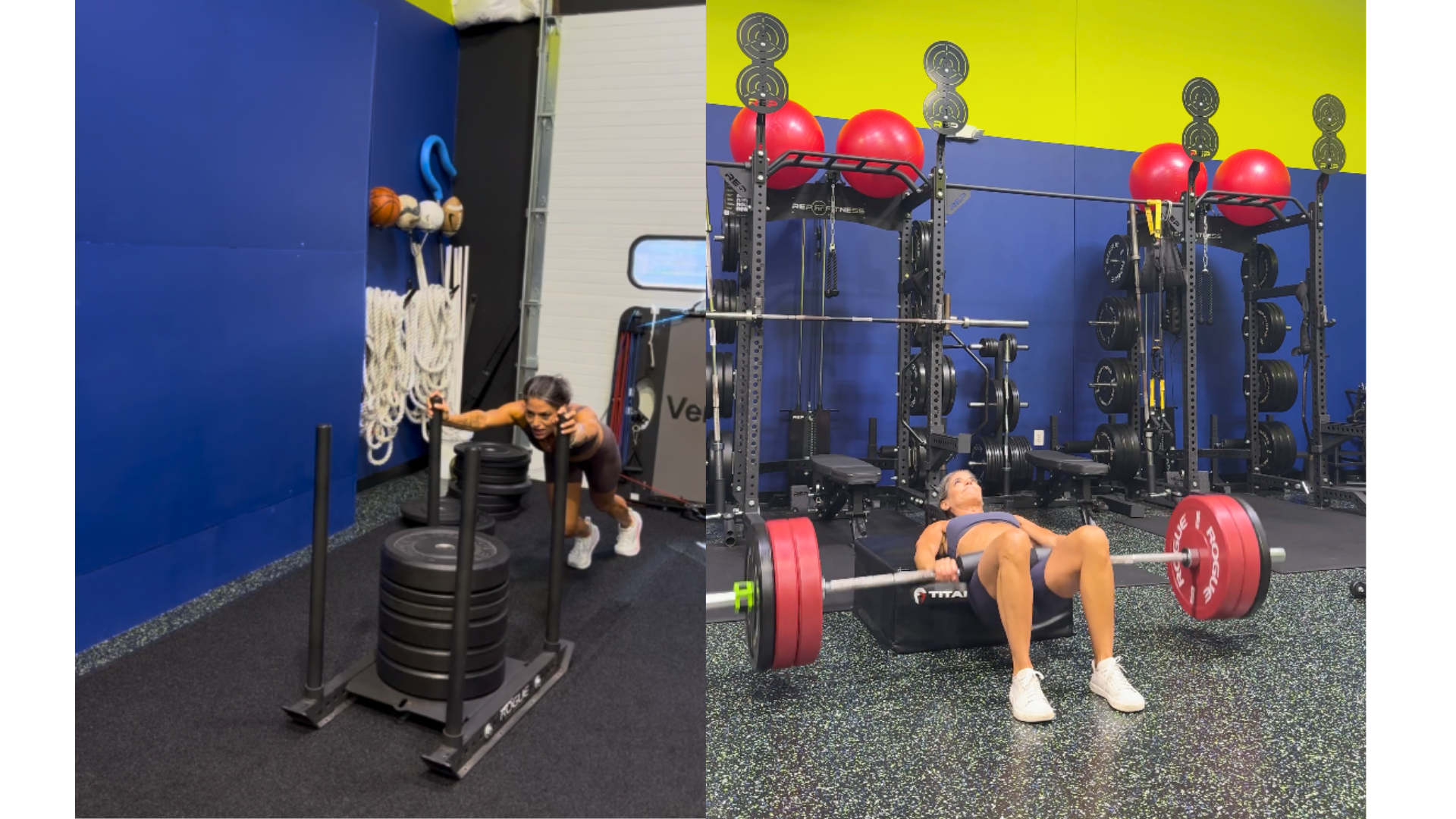
A sharper brain. This is the part I find most exciting. In a 2025 trial, perimenopausal and menopausal women aged 40 to 60 took creatine for eight weeks. Brain scans showed their creatine levels went up, and the women had faster reaction times, better focus and alertness, and less fatigue and trouble concentrating. One group also felt less anxious. Stop. Again. For all my lovelies struggling with brain fog... I present to you the antidote.
Yet another study looked at what happens after a night without sleep and creatine. People who took creatine did better on memory and processing-speed tests than people who didn't. If you know the brain fog, the lost words mid-sentence and the 3am wake-ups of perimenopause, this is research worth paying attention to. These studies are still small, and scientists are just getting started on creatine and the female brain, but every early result points the same way.
Are there side effects?
Creatine is one of the most studied supplements in the world, with decades of research and an excellent safety record. A few things to know:
- The scale may go up a pound or two in the first few weeks. That's water moving into your muscles, right where you want it. It doesn't mean you've gained fat, so please don't quit.
- Some people get mild bloating or an upset stomach, usually at bigger doses. Taking it with food helps.
- Creatine can raise creatinine on a routine blood test, a number doctors use to check kidney function, without any actual kidney problem. Let your doctor know you're taking it.
- If you have kidney disease, talk to your doctor before you start.
And two myths to put to rest. Creatine won't make you bulky; building visible muscle takes years of heavy lifting and a lot of protein, and creatine just helps you get more out of that work. And the worry about hair loss traces back to one small 2009 study in young male rugby players that measured a hormone change, not actual hair loss. It's never been replicated.
How to choose a good creatine
Creatine is only as good as what's actually in the tub, and for whatever reason, the FDA doesn't deem supplements as necessary for tight regulations. So you'll want to look for:
- Creatine monohydrate. It's the form behind nearly all of the research. Newer forms cost more and haven't been shown to work better.
- Third-party testing, so you know it's pure and the dose matches the label.
- One ingredient. No sugar, no sweeteners, no fillers.
What about gummies?
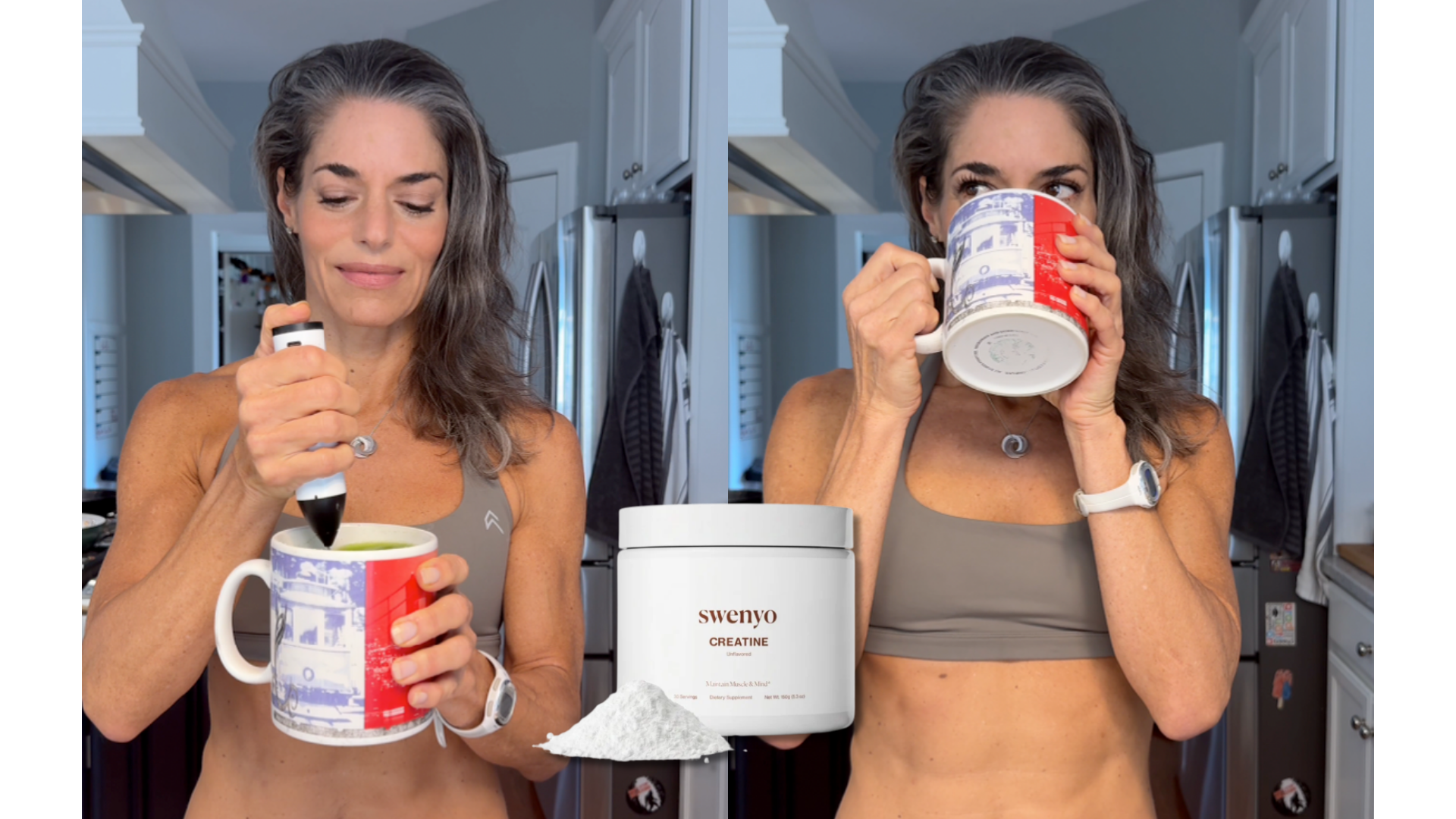
I've tried more than a few brands, and they are all universally terrible. Creatine is chalky and that just doesn't work well as a gummy. Plus, most contain extra added sugar to try and make them more palatable, which is unnecessary because they still taste dreadful. As well, more than a few creatine gummy brands have tested with far less creatine than the labels claims My recommendation: skip the gummies. Creatine is tasteless and dissolves magically in your hot coffee or matcha. Problem solved.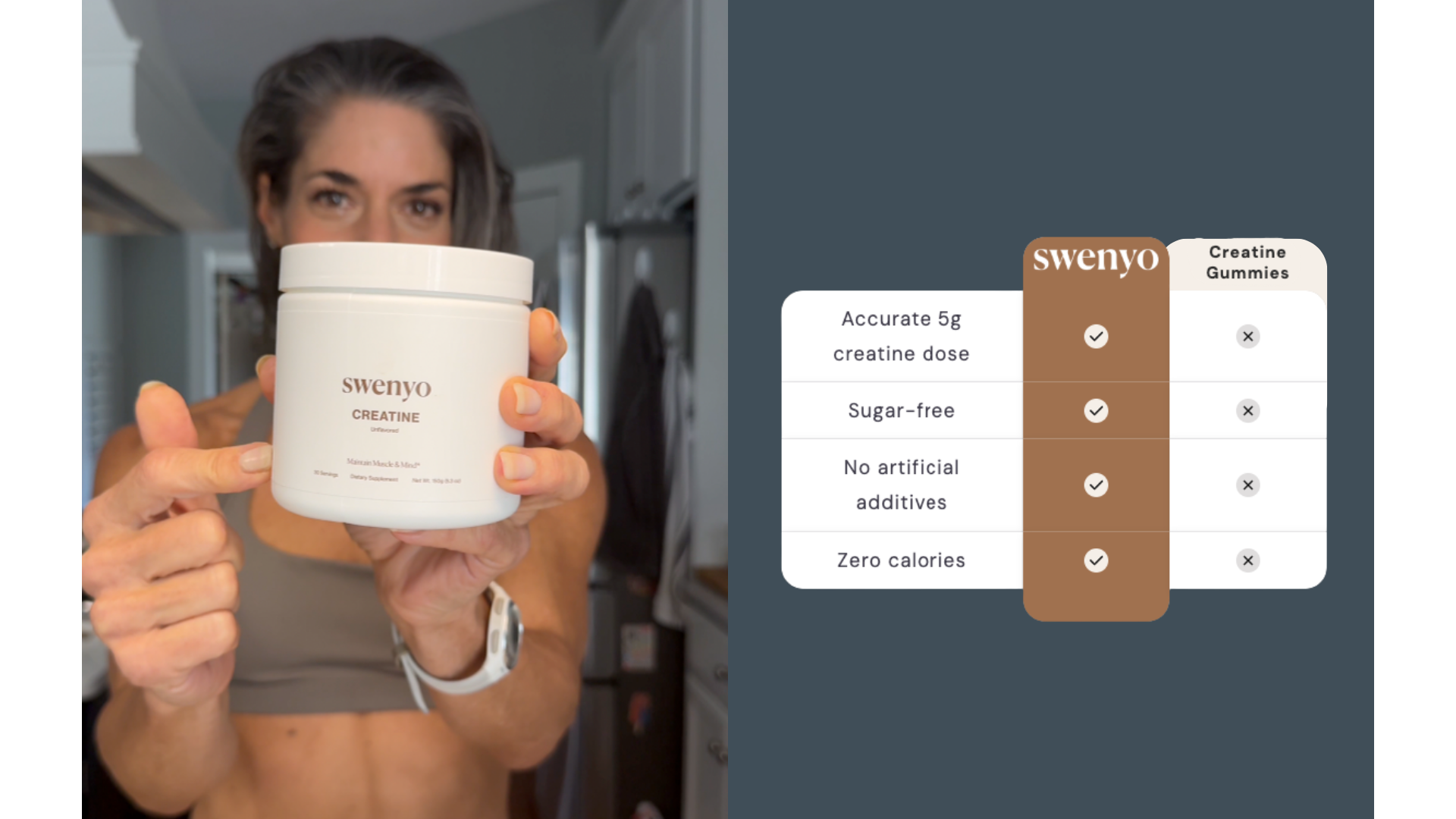
The one I take is Swenyo Creatine. I like this creatine because it's straightforward (just creatine monohydrate), it's third party tested, and there are no added sweeteners or anything else. I take it every morning: a healthy scoop in my matcha, and that it's. My code SILVER10 gets you 10% off. Shop here.
How to take it
Take 3 to 5 grams every day, including your rest days. There's no need for a loading phase; creatine builds up in your muscles over three to four weeks of consistent use. Timing doesn't matter much, so take it whenever you'll remember it: in your coffee, your protein shake or a glass of water.
Remember that when you start taking it, the scale may go up a pound or two in the first few weeks. That's water moving into your muscles, that doesn't mean you've gained fat, so please don't quit.
Stay the course to realize the gains creatine can bring your body. Consistency is what counts.
The bottom line
Creatine works best as an amplifier. On its own it gives you a little something. Paired with protein at every meal and strength training three to four times a week, it helps your body get more out of the work you're already doing, in your muscles and in your brain.
This is exactly the kind of topics we cover in detail in my Aging Well Naturally Masterclass: what actually works for your midlife body, and how to build it into your life so you're thriving. The next cohort opens for enrollment on January 2, and waitlist members hear every detail first. Are you ready for your midlife transformation? Join the waitlist here.
That's all for today; go be great~
x
Juliana
[If you earn a commission or were gifted the product: This post contains an affiliate link. I only recommend products I use myself.]
Author